
My Connection to Admiral Semmes
A ship that anchored in Saldanha Bay on my birthday, a song Cape Town still sings, a flag that stayed behind in a Cape Town museum — and a town of the same name on my doorstep in Alabama.
By Russell Tayler · Katoosh · Mobile, Alabama
Let me say this up front, so nobody gets the wrong idea. I am not related to Admiral Raphael Semmes. I have no family claim on him, and I am not pretending to one.
But I do have a connection to him. It is a strange one. It runs through a date, a harbor, a song, and a museum in Cape Town — and it ends, of all places, on the border of a town in Alabama that carries his name, which is where I live and work today.
His name, by the way, is pronounced “simz.” Semmes. Say it the way it is spelled and every local in Mobile County will know you are not from here.
It starts with a date: 29 July
My birthday is 29 July.
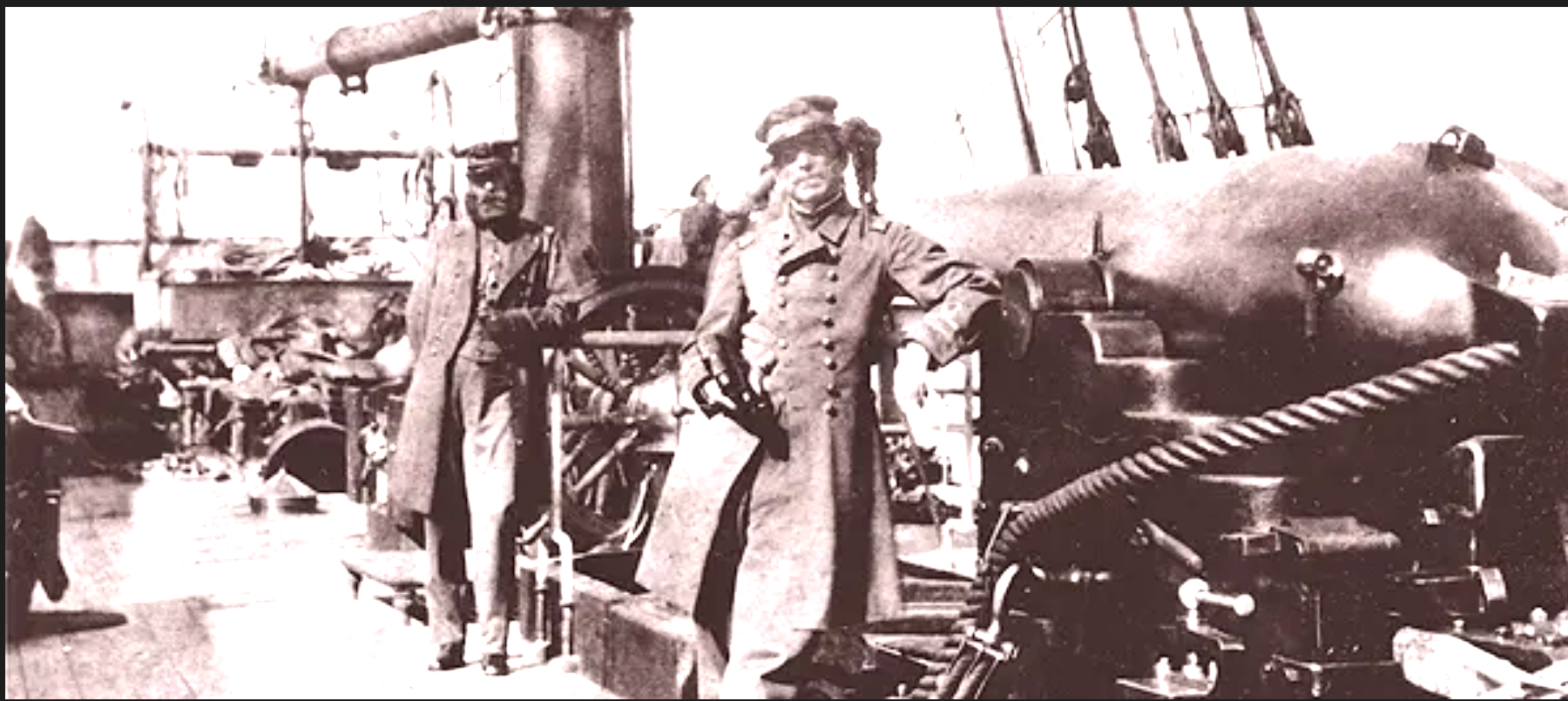
On 29 July 1863, the Confederate warship CSS Alabama anchored in Saldanha Bay, on the west coast of South Africa, about 120 kilometers north of Cape Town. She stayed about a week while her captain, Raphael Semmes, checked that Table Bay was clear of enemy ships before bringing her in.
That is the same date. Not the same year, obviously — I was born in 1960, in Bulawayo, and raised in South Africa. But 29 July, exactly.
Then I found the other one, and that is when it stopped feeling like a small coincidence. A year earlier, on 29 July 1862, the same ship had been launched at Birkenhead, in England, under the plain name Enrica. She slipped away on a supposed trial run, was fitted out in the Azores, and was commissioned as the Alabama on 24 August 1862, with Semmes in command.
So the ship was launched on my birthday, and a year later, to the day, she dropped anchor in South African water on my birthday again. I have spent a good part of my life at sea. Dates like that stay with you.
The captain and the ship were the real thing
Raphael Semmes (1809–1877) had already lived one full naval life before the Alabama. He joined the United States Navy as a midshipman in 1826, served in the Mexican–American War, studied law, and practiced it in Mobile, Alabama, while on extended leave. That Mobile link matters, and I will come back to it.
When the American Civil War came — the Civil War, 1861 to 1865, not the Revolution — he resigned his U.S. commission and joined the Confederate States Navy. First he took the raider CSS Sumter out. Then he got the Alabama.
She was built for one job: hunting Northern merchant ships, far from home, with no friendly port to run to. In a cruise of about 22 months she captured 65 Union merchant ships, boarded more than 450 vessels, and sank the Union warship USS Hatteras off Galveston, Texas, on 11 January 1863. She sailed more than 75,000 miles and never once docked at a Southern port. Whatever you think of the cause she served, as a piece of seamanship that is a hard record to argue with.
I say that as someone who has earned a living on the water — as a first mate and as a captain, running the Intracoastal Waterway between Rhode Island and Fort Lauderdale and crossing the Atlantic from the Canary Islands to the Caribbean. A ship that stays at sea that long, that far from any base, is held together by her captain and her crew, and by nothing else.
Cape Town watched her take a prize, then took her in for repairs
On the morning of 5 August 1863, the Alabama got under way from Saldanha Bay for Table Bay. On the way in, Semmes sighted an American bark, gave chase, and took her. She was the Sea Bride, of Boston. The capture happened in full view of Cape Town.
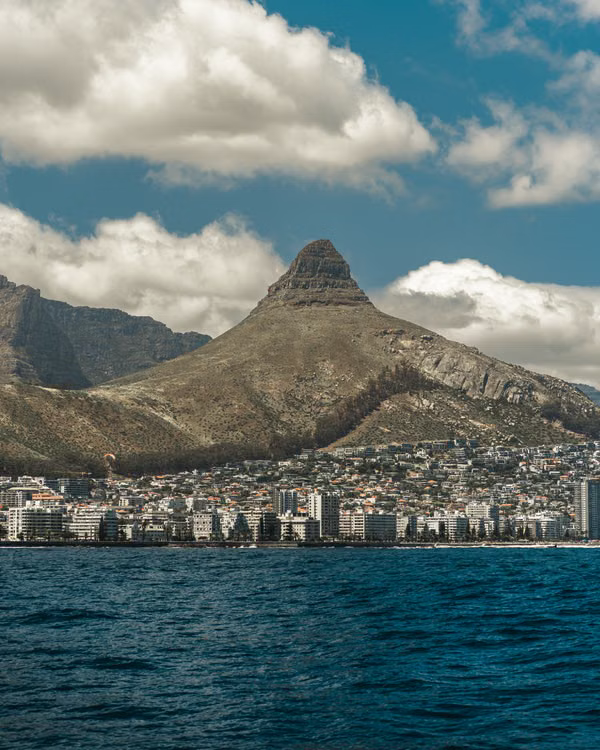
Capetonians turned out in numbers to watch. Crowds filled Signal Hill, Lion's Head and Green Point. The American consul protested that the capture had been made inside neutral waters. Semmes said it had not. The British governor refused to hand the prize back, and the Sea Bride was sold at auction for £3,000.
Two days later a winter gale hit Table Bay — the kind of north-wester that anyone who has sailed the Cape knows well. Semmes rode it out, took on the supplies he needed, and on 9 August steamed around to Simon's Town, on the other side of the Cape, where there was shelter, to complete his repairs. A plaque in Simon's Town still marks the visit.
| Date | What happened |
|---|---|
| 29 July 1862 | Launched at Birkenhead, England, as Enrica (Hull No. 290). |
| 24 August 1862 | Commissioned at sea near the Azores as CSS Alabama, Captain Raphael Semmes in command. |
| 29 July 1863 | Anchored in Saldanha Bay, South Africa, to check that Table Bay was clear. |
| 5 August 1863 | Entered Table Bay, Cape Town, after capturing the Sea Bride in view of the city. |
| 9 August 1863 | Moved to Simon's Town for shelter and repairs. |
| March 1864 | Returned to Cape Town. Semmes gave the ship's flag to William Anderson of Simon's Town. |
| 19 June 1864 | Sunk by USS Kearsarge off Cherbourg, France. Semmes escaped on a passing British yacht. |
Cape Town made a song about her, and it never stopped singing it
This is the part South Africans know in their bones, even if they have never heard of Raphael Semmes.
Daar kom die Alibama, die Alibama kom oor die see
“There comes the Alibama, the Alibama comes over the sea.”
Daar kom die Alibama — Alibama is Alabama respelled the Cape way — is sung to a ghoema drum rhythm by the Klopse and the Malay choirs at Cape Town's New Year carnival. It became the carnival's unofficial anthem. Schoolchildren learn it. I grew up with it in the air, long before I knew there was a real ship behind it, let alone that I would one day live next to a town named for her captain.
Now, the honest part, because it matters to me that this is told straight. Capetonians will tell you the song comes from the Alabama's visit in 1863, and that is the commonly believed story. But there is a serious rival theory, put by the South African writer Lawrence G. Green and others: that the reed bed in the song — die rietkooi — points to a humbler local boat, also called Alabama, that carried reeds into Cape Town harbor. No composer and no dated 1863 first printing of the song have been found.
I can live with both. Either way, a name crossed an ocean, got into a song, and stayed alive in Cape Town for more than 160 years. That is not nothing. That is how stories actually survive — not in a file, but on people's lips.
The flag that stayed behind in Cape Town
I have been to a museum in the Cape Town area and seen the Alabama remembered there, and for years my own memory of it was loose: that when the ship was refitted, some of her old gear came off her and stayed in Cape Town.
When we checked it, the real story turned out to be close to that memory — and better than it. It is a flag.
Iziko Museums of South Africa holds, in its Social History Collection, a battle ensign of the Confederate States that was flown on CSS Alabama. Semmes himself gave it, in March 1864, on the ship's second visit to the Cape, to William Anderson of Simon's Town — whose firm, Anderson's Ship Chandlers, was responsible for the Alabama's repair during her stay there. The flag was donated to the museum in the 1920s, and Iziko featured it in its exhibition on the New Year carnival and the Alibama, at the Bo-Kaap Museum.
Read that again, slowly, because this is the thread that ties my two homes together. The captain's own flag, handed over in Simon's Town to the man whose company had repaired his ship, is still in Cape Town. The city I miss most kept a piece of the ship. And I, who grew up in South Africa and sailed for a living, now live a few miles from a town in Alabama named for the man who handed that flag over.
You could not make that up and be believed. So I checked it instead.
Then the name turned up where I live now
Semmes, Alabama, is a city in western Mobile County, about 15 miles northwest of downtown Mobile. The City of Semmes's own history page says plainly what it is named for: Admiral Raphael Semmes (1809–1877), an officer in the United States Navy and then in the Confederate States Navy.
That naming was not random. Semmes had practiced law in Mobile on his extended leave, he became well liked here, and after the war Mobile gave him a house — the Raphael Semmes House, at 804 Government Street, where he lived from 1871 until his death in 1877. The name was already part of this coast before it was ever put on a map in Mobile County.
I need to be precise about my own address, because people get it wrong. I live in Mobile, on the border of Semmes. Not in Semmes itself. On the border. Close enough that Semmes is part of my daily life — its roads, its nurseries along Moffett Road, its contractors and shops — and close enough that its name is the first one I see when I drive west.
My road here was not a straight one. Bulawayo, where I was born. South Africa, where I grew up — Johannesburg, Cape Town, Plettenberg Bay. London. The South of France. The Bahamas. Providence, Rhode Island, where I captained a yacht. Fort Lauderdale. Millbrook, New York. And then Mobile, Alabama.
Of all the places on that list, Cape Town is the one I miss most. So to end up, at this end of my life, living on the edge of a town named for a captain whose ship is still sung about in Cape Town — that is the connection. It is not blood. It is place, and sea, and a date. For a sailor, that is connection enough.
Why I tell this story in my business
I run Katoosh, here in Mobile. We build websites and help local businesses get found — on Google, and now in the answers that AI tools like ChatGPT, Google AI Overviews and Gemini give people. The trade has a name for that second part: Answer Engine Optimization, or AEO. Our line for it is simple: be the answer.
Here is why this Semmes story belongs in that business, and not just in a family album.
Any business in Semmes can buy a template website. Plenty have. A template with the town name swapped in tells a customer nothing, and it tells Google and the AI tools nothing either. What none of those pages can copy is a real story, rooted in a real place, told by a real person who lives there.
A South African, a former yacht captain, living on the Semmes border, telling you that the captain your town is named for anchored in Saldanha Bay on his birthday and left his flag in Cape Town — that story exists once. It cannot be templated. It cannot be bought off a shelf. And it is exactly the kind of thing that makes a local business worth remembering, and worth finding.
That is the work, stated plainly. Visibility creates trust. Trust creates growth. And visibility that lasts is built on what is true and what is yours — your town, your trade, your story — put where search and AI can find it and quote it.
Semmes has plenty of that material of its own, by the way, quite apart from me: a nursery trade built by growers like Kosaku Sawada that made this area known as a nursery centre of the Southeast, a 1902 schoolhouse still in use, and streets full of contractors, landscapers, auto shops and family businesses along Moffett Road and Schillinger Road. Those are stories waiting to be told properly. Helping the people who own those businesses tell them is what Katoosh is here for.
If you run a business in Semmes or Mobile and you want to be the answer when a customer asks a phone instead of a neighbor, call Katoosh or write to us. Start with your story. The source always wins.
The wind favors the curious.
— Russell Tayler, Founder and President, Katoosh.com LLC, Mobile, Alabama
Sources, and a note on what is remembered
The dates, the flag and the naming of Semmes in this article are checked against the sources below. Two things are stated as what they are, not as settled fact: my museum visit is my own recollection, matched above to the flag Iziko records; and the origin of Daar kom die Alibama is the commonly believed story, with the reed-boat theory noted in the article.
- City of Semmes — City History & Demographics: cityofsemmesal.gov
- Iziko Museums of South Africa — New Year Carnival and the Alibama: iziko.org.za
- U.S. Naval Institute, Proceedings, April 1975 — Daar Kom Die Alabama: usni.org
- CSS Alabama: en.wikipedia.org
- Daar kom die Alibama: en.wikipedia.org
- LitNet — The Alabama Claims and the warship's visits to Cape Town: litnet.co.za
- Raphael Semmes, Memoirs of Service Afloat, Chapter 46: perseus.tufts.edu